
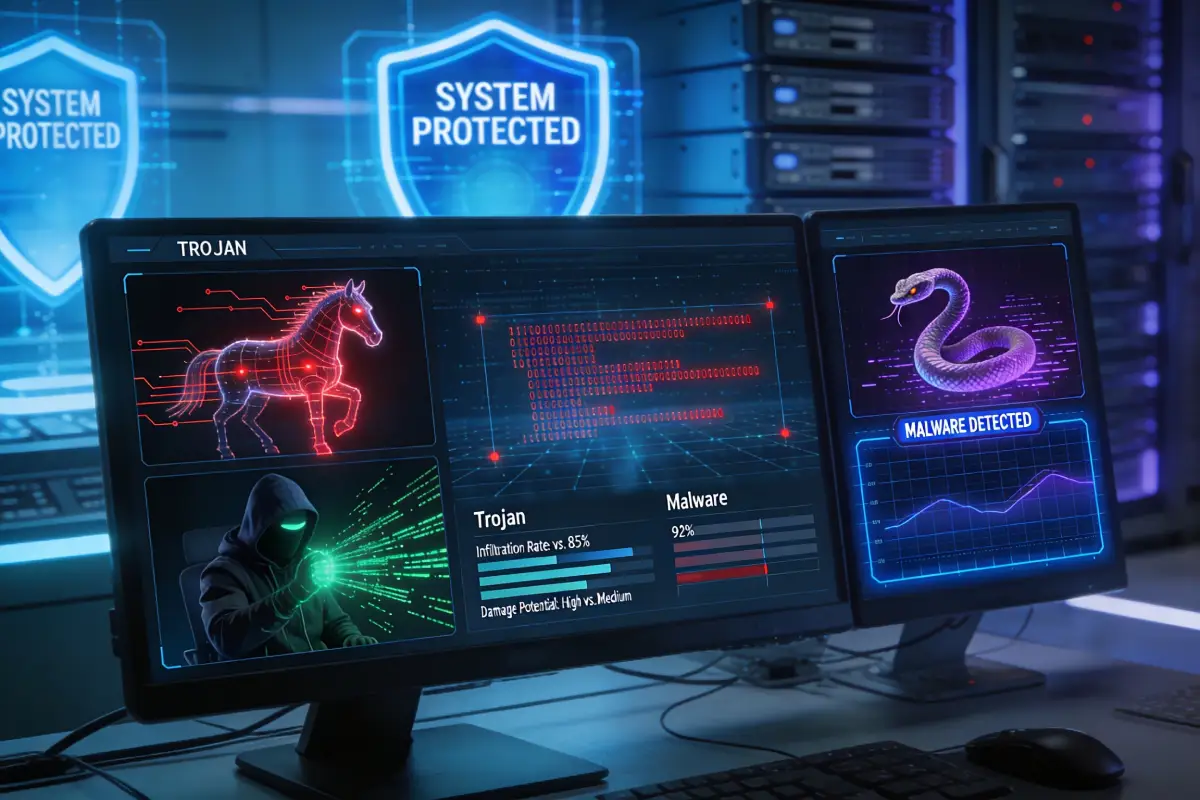

Trojan virus vs malware is one of the most misunderstood cybersecurity topics Many internet users believe Trojans viruses spyware ransomware and malware all mean the same thing In reality malware is a broad cybersecurity category while Trojan viruses represent one specific type of malicious software
Understanding these differences is extremely important because each malware category behaves differently spreads differently and requires different protection strategies Cybercriminals continue creating advanced malware campaigns that combine multiple attack techniques to steal passwords banking credentials cryptocurrency wallets and personal data
Modern cyberattacks rarely rely on a single infection method Attackers often combine Trojans spyware ransomware phishing and credential theft systems together to maximize damage and financial profit
Users who understand malware categories can recognize risks earlier choose better antivirus protection and improve cybersecurity awareness significantly
What is malware
Malware is a general cybersecurity term used to describe any malicious software designed to damage exploit monitor or gain unauthorized access to devices networks or accounts
The word malware comes from malicious software
Main goals of malware
Different malware families are designed for different criminal objectives including
Password theft
Banking fraud
Ransomware extortion
Spyware surveillance
Cryptocurrency theft
Remote system control
Data destruction
Cybercriminals monetize malware attacks in multiple ways depending on the target and infection type
Major malware categories
Malware includes many threat types such as
Viruses
Trojans
Spyware
Ransomware
Rootkits
Adware
Worms
Keyloggers
This means Trojans are actually one malware category inside the broader malware ecosystem
What is a Trojan virus
A Trojan virus is malware disguised as legitimate software Unlike traditional viruses Trojans rely heavily on social engineering to trick users into installing dangerous files voluntarily
The name comes from the ancient Trojan Horse story because the malware hides malicious code inside something that appears harmless
Common Trojan disguises
Cybercriminals frequently disguise Trojans as
Game cracks
Free software
Fake browser updates
VPN applications
Video players
Email attachments
Browser extensions
Users often install these files believing they are safe
Main objectives of Trojans
Trojan malware may
Steal passwords
Monitor activity
Install ransomware
Hijack browsers
Open remote access channels
Disable antivirus software
Many infections remain hidden for long periods while silently collecting data
Key difference between Trojan virus and malware
The biggest difference is that malware refers to all malicious software while Trojans represent one specific malware category
Simple explanation
All Trojans are malware
But not all malware is Trojan malware
This distinction helps users better understand cybersecurity threats
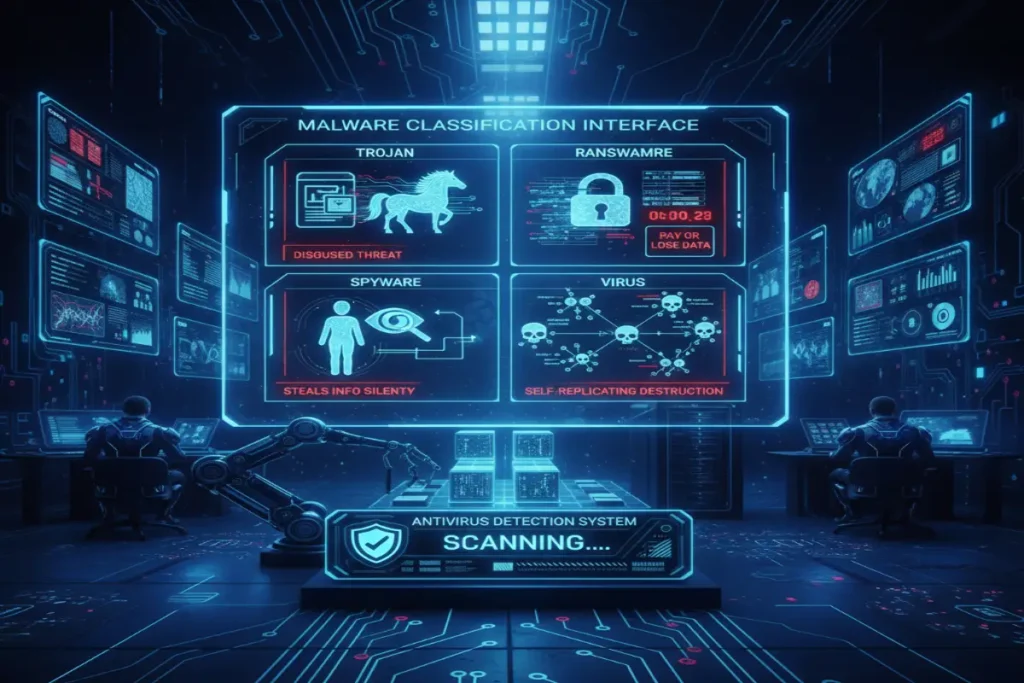
Malware categories compared
Virus
Self replicating malicious code
Trojan
Disguised malicious software
Spyware
Monitoring and surveillance malware
Ransomware
File encryption extortion malware
Adware
Aggressive advertising malware
Rootkits
Hidden system level malware
Understanding these categories improves digital threat awareness
How Trojan malware spreads
Trojan malware spreads differently than many traditional viruses
Trojan infection methods
Most Trojan infections happen through
Phishing emails
Fake software downloads
Pirated applications
Malicious advertisements
Browser extension scams
Fake security alerts
Attackers rely on deception instead of automatic replication
Why social engineering is important
Trojan attacks succeed because they manipulate human behavior
Cybercriminals create
Urgent messages
Fake updates
Scare tactics
Limited time offers
to pressure victims into downloading infected files
Modern phishing campaigns are increasingly powered by artificial intelligence making scams more convincing than ever
How computer viruses spread
Traditional computer viruses behave differently from Trojans
Virus replication behavior
Viruses can self replicate by attaching malicious code to legitimate files or programs
Once executed viruses may spread automatically across systems and networks
Typical virus activities
Corrupting files
Damaging operating systems
Spreading through removable media
Infecting software applications
Although viruses still exist today Trojans and ransomware generate much larger financial profits for cybercriminals
Trojan malware and banking attacks
Banking Trojans are among the most dangerous malware categories because they directly target financial information
How banking Trojans work
Banking Trojans monitor browser sessions and intercept login credentials during online banking activity
Attackers may steal
Bank usernames
Passwords
Two factor authentication codes
Credit card information
Modern banking malware can remain hidden for weeks while silently collecting sensitive financial data Users who want a complete malware cleanup strategy should read [INTERNAL LINK: Trojan virus removal → trojan-virus-symptoms-every-pc-user-should-know before attempting manual system recovery
Famous banking Trojans
Historically dangerous malware families include
Zeus
Emotet
Dridex
TrickBot
QakBot
These campaigns caused billions of dollars in global financial losses
Spyware vs Trojan malware
Spyware and Trojans are closely related but not identical
What spyware does
Spyware focuses primarily on surveillance and information gathering
Spyware may
Record keystrokes
Capture screenshots
Monitor browsing activity
Track passwords
Access webcams
Trojan spyware combinations
Many Trojans contain spyware functionality making modern malware attacks extremely versatile
Attackers often combine multiple malware capabilities into a single infection
Ransomware vs Trojan malware
Ransomware and Trojans also serve different purposes
What ransomware does
Ransomware encrypts files and demands payment for decryption
Victims may lose access to
Documents
Photos
Business databases
Backups
How Trojans assist ransomware attacks
Many ransomware campaigns begin with Trojan infections Attackers first gain access silently before deploying encryption payloads later
Credential stealing attacks are often combined with spyware ransomware and browser hijackers which makes full system protection extremely important Best antivirus for Trojan protection →http://how-trojans-steal-passwords-and-banking-data
Rootkits and hidden malware threats
Rootkits are advanced malware tools designed to hide malicious activity from users and antivirus software
Why rootkits are dangerous
Rootkits provide stealth capabilities allowing attackers to remain hidden for long periods
These threats may conceal
Processes
Files
Registry entries
Network activity
Trojan rootkit combinations
Some advanced Trojans install rootkits to maintain persistence and avoid detection
This makes malware removal significantly more difficult
Why modern malware is becoming more advanced
Cybersecurity analysts warn that malware threats continue evolving rapidly
AI powered cyberattacks
Artificial intelligence now helps attackers
Generate phishing emails
Automate malware campaigns
Create fake websites
Personalize scams
Malware as a service
Cybercriminal groups now sell malware kits through underground subscription services
This allows inexperienced attackers to launch sophisticated attacks easily
Cryptocurrency targeting
Cryptocurrency wallets are major malware targets because blockchain transactions are difficult to reverse
How to protect against Trojan malware and other threats
Strong cybersecurity habits reduce infection risks significantly
Use reputable antivirus software
Recommended security tools include
Bitdefender
Norton
ESET
Malwarebytes
Sophos
Avoid pirated software
Cracked applications remain one of the largest Trojan distribution methods worldwide
Keep systems updated
Operating system and browser updates patch vulnerabilities exploited by attackers
Enable multi factor authentication
MFA reduces account takeover risks even if passwords are compromised
Learn phishing awareness
Users should inspect suspicious emails downloads and browser notifications carefully before interacting with them
Which threat is more dangerous
Different malware categories create different risks
Trojans
Dangerous for stealth access password theft and long term surveillance
Ransomware
Dangerous for immediate financial extortion and business disruption
Spyware
Dangerous for privacy compromise and hidden monitoring
Rootkits
Dangerous for stealth persistence and advanced system compromise
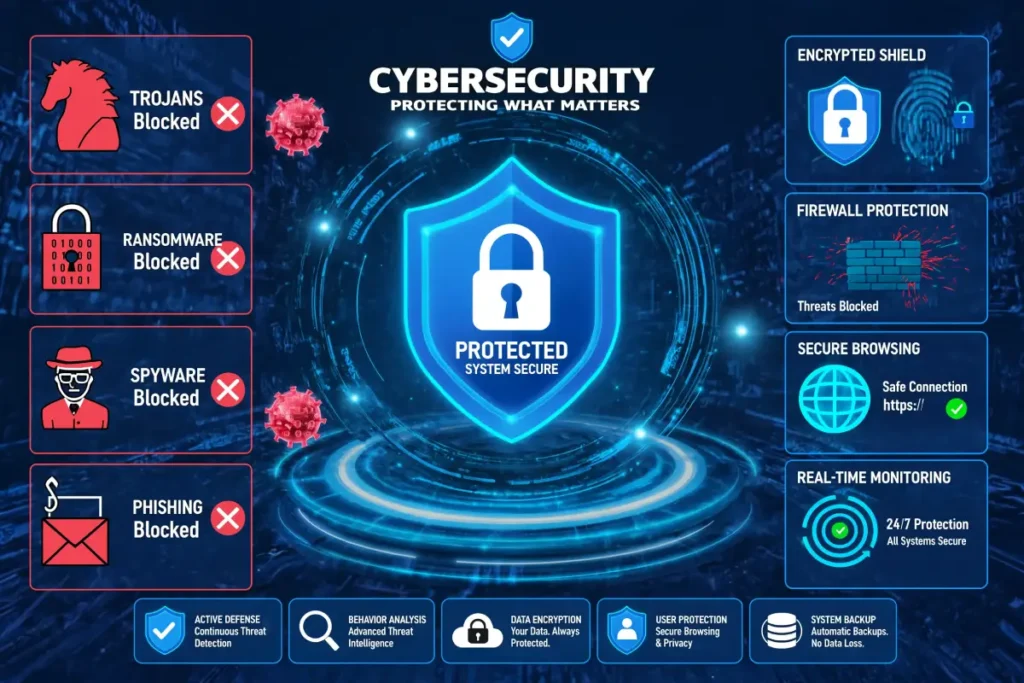
Modern cyberattacks frequently combine several malware types together making layered cybersecurity defense essential